
earth
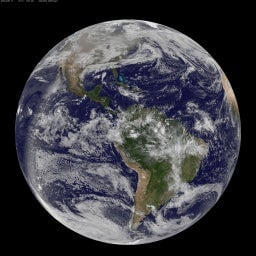
Earth: Our Home Planet in the Solar System
Earth, often referred to as the “blue marble,” is a fascinating and diverse planet characterized by its rocky composition and vibrant hues. Situated as the third planet from the Sun, it holds the distinction of being the largest among the four inner terrestrial planets in our solar system. What makes Earth particularly remarkable is its status as the only known celestial body capable of supporting life.
A significant portion of Earth’s surface, approximately 71%, is covered by vast oceans, which have played a pivotal role in the development and evolution of life for around 3.8 billion years. These expansive bodies of water serve not only as a habitat for countless organisms but also as the cradle of early life forms that paved the way for the rich biodiversity we see today. Additionally, Earth is enveloped by a thick atmosphere that is rich in oxygen, a result of complex biological processes over millennia. This atmosphere not only sustains life but also protects the planet from harmful solar radiation and helps regulate its climate.
In the realm of astronomy, Earth is both a quintessential benchmark for identifying habitable planets beyond our solar system and a focal point for scientific observation. Its unique features and dynamic ecosystems make it an invaluable reference point for understanding potential life-supporting conditions elsewhere in the universe. Researchers and astronomers continuously study Earth’s intricacies to gain insight into planetary formation, climate systems, and the essential factors that contribute to life as we know it. In essence, Earth serves as a living laboratory that enriches our understanding of life’s possibilities across the cosmos.
Position and Motion in the Solar System
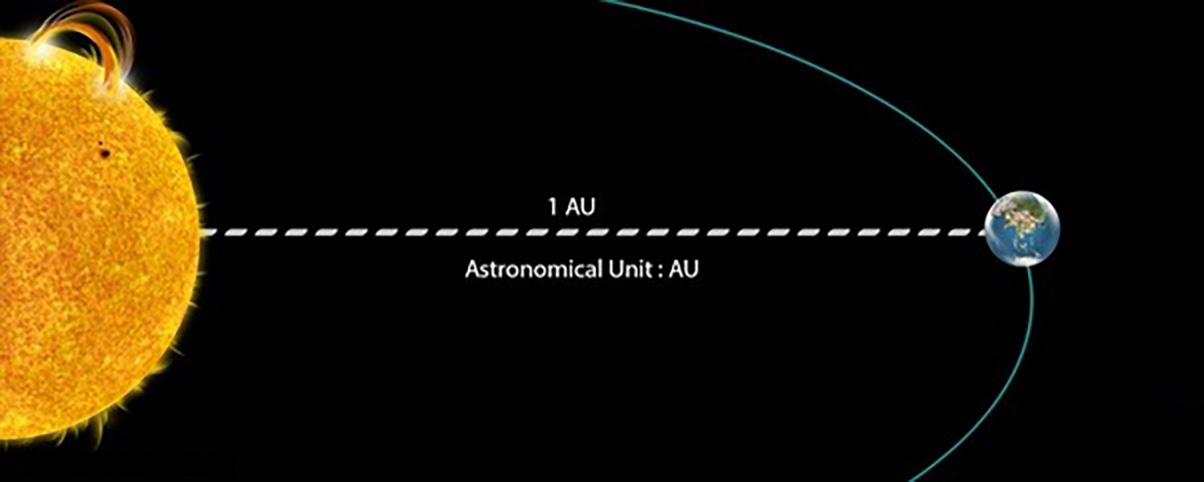
Earth orbits the Sun at an average distance of approximately 1 astronomical unit (AU), which translates to roughly 150 million kilometers (93 million miles). This immense distance allows sunlight to travel to our planet in about 8.3 minutes, illuminating the diverse landscapes and ecosystems that thrive on its surface. A complete orbit around the Sun—known as a year—takes around 365.25 days, a time frame that has been finely calibrated in our calendar systems.
In addition to its orbital motion, Earth spins on its axis, completing one full rotation approximately every 23.9 hours. This rotation is fundamental to the establishment of our day-night cycle, shaping not only the interval of light and darkness we experience but also influencing the biological rhythms of many organisms. Earth’s rotational axis is tilted by about 23.4° relative to the plane of its orbit around the Sun. This axial tilt is a critical factor in the creation of seasons on our planet; when the northern hemisphere is tilted toward the Sun, it basks in the warmth of summer, while simultaneously, the southern hemisphere experiences the chill of winter. Six months later, the situation reverses, bringing warmth to the south and cold to the north.
Earth’s path around the Sun is nearly circular, featuring only a slight eccentricity, which contributes to the stability of its climate. Positioned squarely in the Sun’s “habitable zone,” Earth enjoys conditions that allow for liquid water to exist on its surface—a key ingredient for life. Indeed, astronomers use Earth’s distance from the Sun as the defining standard for an astronomical unit (AU), emphasizing its significance in celestial measurements.
These optimal conditions have resulted in a moderate climate by planetary standards, fostering a diverse array of ecosystems. The presence of liquid water, coupled with a stable climate and protective atmosphere, enables a rich tapestry of life to flourish, making Earth a unique oasis in the vast expanse of the universe. In essence, our planet is a delicate balance of physical factors that create an environment conducive to the complex web of life that thrives here, highlighting just how exceptional and precious Earth truly is.
Earth’s internal structure is intricately layered, composed of distinct zones that each play a vital role in the planet’s geology and physical properties. At the innermost center lies the inner core, a solid sphere primarily made of iron, boasting temperatures that can reach up to 5,500 degrees Celsius (about as hot as the surface of the Sun). Surrounding this solid core is the outer core, which is made up of fluid iron and nickel. It is this dynamic movement of molten metal that is responsible for generating Earth’s magnetic field, a crucial component in our planet’s ability to sustain life.
Above the core resides the mantle, a thick, rocky layer that extends to a depth of approximately 2,900 kilometers (1,800 miles). This mantle is composed of silicate minerals that contain a mix of iron and magnesium, and it plays a significant role in Earth’s geology. The heat from the inner core causes convection currents within the mantle, driving the movement of tectonic plates and resulting in various geological phenomena such as earthquakes, volcanic eruptions, and the shifting of continents. The interactions between these plates shape the Earth’s surface, giving rise to mountain ranges and ocean basins.
Capping these layers is the outer crust, which is relatively thin compared to the mantle and core. The lithosphere, which includes the rigid outer crust and the upper portion of the mantle, is divided into several large and small tectonic plates that float on the semi-liquid asthenosphere beneath. These plates are in constant motion, albeit at very slow speeds, leading to a dynamic surface and continuous geological changes.
Earth’s significant mass, approximately 5.97 × 10^24 kilograms, and an average density of about 5.5 grams per cubic centimeter, are higher than those found in other terrestrial planets. This density indicates a substantial metallic core and a rocky mantle, which distinguishes Earth from its planetary neighbors.
Additionally, the action of the molten outer core and Earth’s rapid rotation contributes to the creation of a magnetic field that extends outward into space, forming a protective teardrop-shaped magnetosphere. This magnetic shield plays a critical role in safeguarding the planet from the solar wind—a stream of charged particles emitted by the Sun—which can be harmful to life and technology. Furthermore, interactions between the solar wind and the magnetosphere lead to the spectacular natural light displays known as auroras, predominantly observed near Earth’s polar regions.
With an equatorial diameter of about 12,756 kilometers, Earth is classified as the largest terrestrial planet in our solar system. Its size is slightly greater than that of Venus but smaller than Triton, Neptune’s moon. Earth’s active geological processes, driven by the heat from its core and the movements of tectonic plates, underscore the planet’s complexity and vitality. This layered internal structure not only influences its geology and geography but also plays a crucial role in making Earth a unique and dynamic environment that supports a diverse array of life.
Earth is often referred to as the “ocean planet,” a title that reflects the overwhelming presence of saltwater oceans on its surface—about 71% of the planet is covered by these vast bodies of water. These oceans boast an average depth of approximately 3.7 kilometers (about 2.3 miles) and contain the vast majority of Earth’s water, playing a crucial role in regulating climate and supporting life. The oceans are not only crucial for biodiversity but also affect global weather patterns and ocean currents, which can influence climate on a global scale.
The remaining 29% of Earth’s surface is composed of landmasses, including continents and islands that feature a diverse range of geographical features such as mountains, plains, valleys, and deserts. One interesting fact is that Earth’s tallest volcano, Mauna Kea, is located on the Big Island of Hawaii; however, much of it is submerged beneath the ocean. Additionally, the longest mountain range on Earth, the Mid-Atlantic Ridge, is hidden under the sea, showcasing the prominence of underwater geology in the Earth’s topography. When observed from space, Earth presents a striking blue hue, thanks to its abundant liquid water, which is interspersed with green and brown landmasses and streaked with swirling white clouds.
Earth’s atmosphere comprises a delicate layer of gases that envelops the planet, providing essential conditions for life. By volume, it consists of about 78% nitrogen (N₂) and 21% oxygen (O₂), with argon making up approximately 1%. There are also trace amounts of gases such as carbon dioxide (CO₂), water vapor, and methane (CH₄), collectively totaling around 0.04% of the atmosphere. Despite their minor proportions, these trace gases include vital greenhouse gases—especially CO₂ and water vapor—that help trap heat and maintain a stable climate, essential for sustaining life. Water vapor, in particular, is the most abundant greenhouse gas, and its levels fluctuate significantly with temperature and weather conditions.
The Earth’s atmosphere is layered, divided into distinct regions such as the troposphere, stratosphere, mesosphere, and thermosphere, each playing a unique role in the overall functioning of the planet. The atmosphere acts as a protective barrier, blocking most harmful solar ultraviolet (UV) and X-ray radiation, and it also serves as a shield against meteoroids, causing them to burn up upon entering the thicker regions of the atmosphere. This interaction results in spectacular meteor showers that can be observed from the surface. Furthermore, clouds of water vapor and ice continuously circulate within the atmosphere, driving varying weather patterns and climate conditions across the globe.
Earth’s magnetic field plays a pivotal role in shaping the planet’s space environment. It acts as a protective shield, deflecting charged particles emitted by the Sun, commonly known as solar wind. Without this magnetic field, these energetic particles could strip away the atmosphere and harm living organisms. When charged particles become trapped by Earth’s magnetic field, they spiral toward the poles, where they interact with atmospheric atoms to produce mesmerizing displays of light known as the aurora borealis (northern lights) and aurora australis (southern lights).
The interplay between Earth’s magnetic field and atmosphere creates a space environment around our planet that is uniquely supportive of life, contrasting starkly with the harsh conditions found around planets like Mercury or Mars. The combination of a robust magnetic field and a well-regulated atmosphere contributes to the stability of Earth’s climate and its capacity to harbor diverse ecosystems, making it not only a haven for life but also a fascinating subject of study in planetary science.
Unique Features and Habitability
Earth occupies a unique position within our Solar System, distinguished by its abundant surface water and the presence of diverse life forms. In the field of astronomy, it is frequently highlighted as the only planet confirmed to harbor life. This vibrant world is characterized by its extensive oceans and atmosphere, which together create what is known as a “Goldilocks” environment—neither too hot like Venus nor too cold like Mars, but rather just right to support the existence of liquid water and facilitate organic chemistry.
This temperate climate is not merely a stroke of luck; it results from Earth’s fortunate location within the Sun’s habitable zone, where conditions are conducive to life as we know it. Beyond its distance from the Sun, Earth possesses several vital mechanisms that have helped stabilize its environment over geological timescales. These include the carbon cycle, which regulates atmospheric carbon dioxide levels; plate tectonics, which shapes the planet’s surface and influences climate; and a strong magnetic field that shields the planet from harmful solar radiation.
The presence of life on Earth has profoundly impacted its atmospheric composition, contributing to its distinction within the cosmos. For instance, the free oxygen in our atmosphere—comprising approximately 21% by volume—exists thanks to the process of photosynthesis carried out by plants, algae, and cyanobacteria. Additionally, the ozone layer located in the stratosphere serves to filter out harmful ultraviolet (UV) light from the Sun, further enhancing the planet’s habitability. These biosignatures not only indicate the presence of life but also make Earth easily identifiable when viewed through the technique of spectroscopy, a method utilized in the study of exoplanets.
Another remarkable aspect that sets Earth apart is its large natural satellite, the Moon. With a radius of about 1,738 kilometers, the Moon is exceptionally large when compared to Earth itself. Formed from the debris of a colossal impact early in the planet’s history, the Moon plays a crucial role in stabilizing Earth’s axial tilt. This axial tilt stability is significant because it ensures that Earth’s seasons remain relatively mild and predictable over extended periods, fostering a more stable environment for life. In contrast, without the Moon’s influence, the axial tilt—and consequently the climate—could fluctuate wildly, potentially rendering the conditions for life far less hospitable. Notably, none of the other terrestrial planets in our Solar System possess such a large moon; for instance, Mars has tiny moons, while Venus and Mercury are devoid of natural satellites altogether.
In summary, Earth’s position within the habitable zone of the Solar System, coupled with its unique geological and atmospheric characteristics, makes it a singular haven for life, unlike any other planet we know of. Its large moon further enhances its stability, contributing to an environment that has nurtured and sustained life for billions of years.
From the perspective of an astronaut, Earth appears as a vibrant and dynamic world teeming with life. The breathtaking views from space have captivated humanity since the dawn of the space age. Iconic images like the famous “Blue Marble,” captured by the Apollo 17 mission in 1972, showcased Earth in all its glory, a stunning blue orb suspended in the blackness of space, adorned with swirling white clouds that dance over the continents and polar ice caps. This photograph served not only as a scientific triumph but also as a profound reminder of our planet’s beauty and fragility.
In recent years, advancements in technology have allowed satellites and spacecraft to continue providing extraordinary imagery of our home planet. For instance, NOAA’s DSCOVR satellite, positioned at the Sun-Earth Lagrange point, captures mesmerizing full-disk images of Earth in multiple wavelengths on a daily basis. These comprehensive global images are invaluable for climate science, serving as crucial data points for understanding Earth’s climate systems and changes. They also enable scientists to simulate how Earth might appear as an exoplanet in distant solar systems, giving insight into the characteristics that might be detected by future observers.
The sense of Earth’s smallness and fragility is further amplified when viewed from the vast distances of space. In 1990, NASA’s Voyager 1 spacecraft took the iconic “Pale Blue Dot” photograph from around 6 billion kilometers away. In this image, Earth is reduced to a mere point of light, a solitary pixel suspended in the vastness of the cosmos. This profound perspective underscores the idea that our planet, while rich with life and diversity, is but a tiny fragment in the expansive universe. More recently, orbiters around Mars, such as the European Space Agency’s Mars Express, have captured images of Earth and its Moon from hundreds of millions of kilometers away, revealing our planet as just a few pixels wide in the Martian sky—approximately 280 million kilometers away—further emphasizing our vulnerability in the cosmos.
Astronomers also gain insights into Earth’s characteristics through indirect observation. During a lunar eclipse, for example, Earth casts a shadow on the Moon that often appears with a reddish hue. This phenomenon occurs due to the scattering of sunlight as it passes through Earth’s atmosphere, with blue wavelengths being filtered out and red wavelengths reaching the Moon. Such natural occurrences, along with data from spaceborne spectra, provide critical information about Earth’s atmosphere and surface conditions, even when viewed as a remote point in the sky.
Moreover, Earth serves as an invaluable analog for exoplanet studies. Researchers compress vast imagery of the Earth into single “pixels” to refine detection methods for exoplanets. By employing multi-wavelength data from DSCOVR, scientists have demonstrated that even a single-pixel image of Earth can unveil intricate details such as cloud cover and allow estimates of the length of a day. These methods empower astronomers to understand what the signatures of water, cloud formations, rotation, and even potential signs of life might look like on distant worlds across the galaxy.
In summary, Earth occupies a dual role in the realm of astronomy: it is both our home planet and a prototype for habitable worlds beyond our own. Through detailed observations conducted by spacecraft and a rich corpus of comparative planetology, astronomers can place Earth within a broader cosmic context. Simultaneously, Earth-based telescopes and satellites continue to monitor our planet’s properties, offering a living model of a dynamic, water-rich world that lays the groundwork for our understanding of life beyond our solar system.