
The Solar System
What It Contains
At the center sits the Sun, a G‑type main‑sequence star whose gravity and energy shape everything that follows. Orbiting it are the terrestrial planets (Mercury, Venus, Earth, and Mars) and the giant planets (Jupiter, Saturn, Uranus, and Neptune). Beyond Neptune lies a wide expanse of trans‑Neptunian objects in the Kuiper Belt, home to dwarf planets such as Pluto, Haumea, Makemake, and Eris. Closer in, between Mars and Jupiter, the asteroid belt holds remnants of early planet building. Farther still, an enormous, spherical reservoir called the Oort Cloud likely hosts long‑period comets, marking the Solar System’s outermost extent.
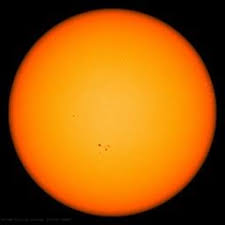
The Sun
A G‑type main‑sequence star whose gravity and energy govern the Solar System. A turbulent plasma sphere driving space weather via the solar wind and magnetic activity.
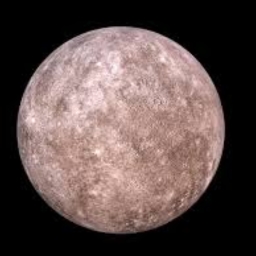
Mercury
Airless, heavily cratered world with extreme temperature swings and a large iron core.
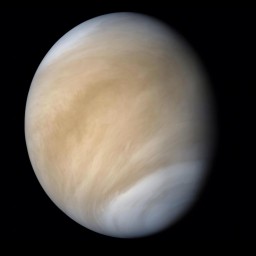
Venus
Earth‑sized but shrouded by a dense CO₂ atmosphere and global sulfuric‑acid clouds; surface hot enough to melt lead.
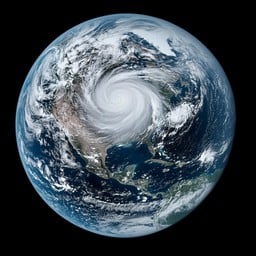
Earth
Water‑rich, active geology, protective magnetosphere, and diverse life. The baseline for comparative planetology.
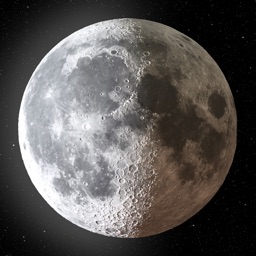
The Moon
Earth’s natural satellite and the best‑studied airless body: tidally locked, geologically evolved from primordial differentiation and mare volcanism; the benchmark for impact chronology.
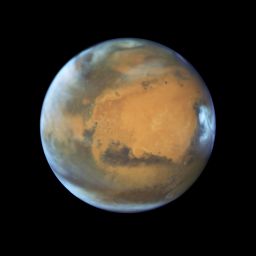
Mars
Basaltic surface with ancient river valleys, polar caps, global dust storms; ongoing searches for past habitability.
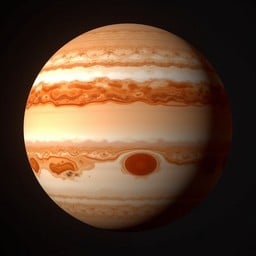
Jupiter
Largest planet; deep atmosphere with banded clouds and the Great Red Spot; immense magnetosphere; home to the Galilean moons.
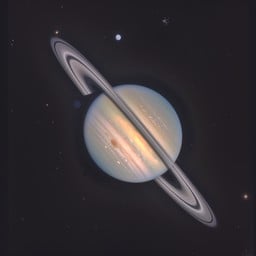
Saturn
Ringed giant with a complex ring system and diverse moons, including Titan (dense atmosphere) and Enceladus (active plumes).
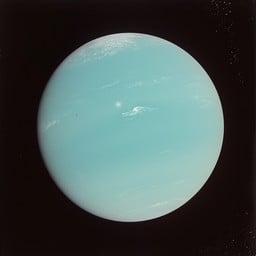
Uranus
Ice giant with ~98° axial tilt (rotates on its side), faint rings, and a cold, hazy atmosphere rich in methane.
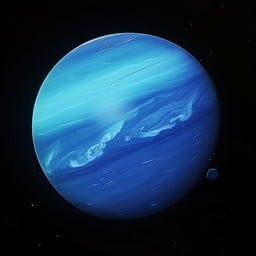
Neptune
Windy ice giant with dynamic weather and methane‑tinted clouds; Triton is a large, likely captured Kuiper Belt moon.
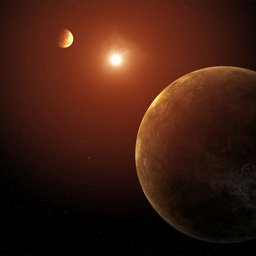
The Dwarf Planets
Spherical small worlds that share orbits with other bodies. Notables include Ceres (in the asteroid belt) and Pluto, Haumea, Makemake, and Eris beyond Neptune.
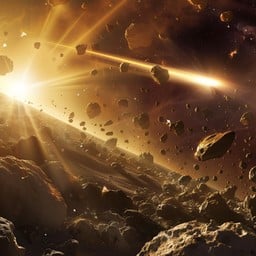
The Asteroid Belt
Remnants of planet formation between Mars and Jupiter. Size distribution from dust to Ceres; families shaped by resonances with Jupiter.
The Kuiper Belt
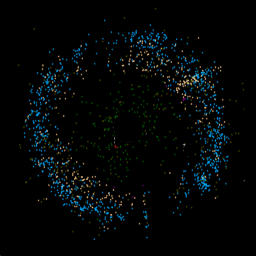
A broad, flattened disk beyond Neptune hosting icy bodies and dwarf planets; sculpted by resonances with Neptune.
The Oort Cloud
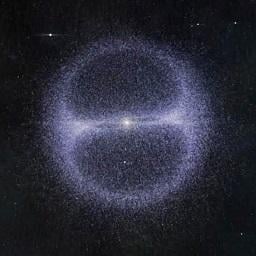
A hypothesized spherical reservoir of long‑period comets extending tens of thousands of AU—our system’s icy frontier.